Saturday, December 5, 2020

The Nations First Shield Law

 For over two hundred years in the United States of America, the struggles of journalists have brought several ethical issues to the governments feet. In attempts to stun their struggles, state by state legislature made shield laws(specifically in Maryland) were brought to the discussion. The development of this shield law is worth note in understanding how it effects first amendment laws.

The way in which ordinary American citizens interpret and react to law outside of the courts while forcing an amendment in the judicial system, is defined as Popular Constitutionalism. The concept that legislators affect the interpretation of the Constitution comes for a Jeffersonian idea known as departmentalism, simply put meaning that all branches of the government must uphold fidelity of the Constitution. The combination of citizen and law plays a big role in comprehending the judicial system of the nation.

A recurring theme between the courts and legislatures has been their exchanges. Legislative selection from judge made ideas of constitutional law aids in shrinking the risk of falsehoods on constitutional premises. In other words, it prevents legislative action from doing anything that would by law, deemed unconstitutional.

Justice and the Press - WSJ
Legal scholar Robert Post has an interesting take on the difference between constitutional law and constitutional structure, referring to the gap between the two as legislature made law and court made law. As previously mentioned, a massive factor in the courts decisions are those who hold no official political positions. This is because constitutional law could not exist without considering the core values of the citizens it exists for.

In modern America, the way the constitution is interpreted is at the peak of legal scholarship. Statutory law scholar Peter Shane explains that the reason behind this "a one way understanding", in that non judicial actors invent the interpretation of our Constitution, then relate it bigger threat affecting the U.S constitutional theorist, who for the most part work for legal amendments. The label "constitutional culture" to define how citizens partake in the developments and legal terms surrounding it.

Proceeding onto the framework of non judicial precedents, it is time to investigate the wide range of social actors that play a role. Activists, journalist, and industry leaders to name a few, control a certain area of constitutional matters, that is unless they are managed by the courts. In which case they plug holes in improving the doctrine, as defined by Micheal Gerdharts model.

One method that non judicial actors often use to have their voices heard in the courts and political offices is the initiation of a constitutional concept dialogue. These dialogues are intended to make a point, and a appeal to constituents, which is an incentive for state legislators to follow suit. They send a notice to the courts about how the public will or see's an issue.

To conclude, the events leading up to the creation of the Maryland shield law would not had been possible without the influence of suitors outside of the courts. For journalist specifically, laws previously set in place did not consider the nature of their industry, thus a push for amendments and developments to the law were made not just by those in the press but those effected by it as well.


Monday, November 16, 2020

Regent Of California vs Bakke: Customs and Norms

 On behalf of the Medical School at the University of California, we are here to address the issues of Allan Bakke. I understand that Allan has been rejected by our Medical School, and it is of his opinion that it is upon the basis or his race. Obviously we disagree with this accusation on multiple different angles, but the argument I plan to present is one surrounding customs and norms.

To simplify, let me explain what is mean't by customs and norms. This refers to the culture and climate of the university surrounding specific issues. In this case the topic is race. Historically the University of California, like several other institutions, was whites only. Now that we are in the year 1978 there has been a wake up call, and there is a demand for social justice not just for African Americans but for several minorities in the United States.

The previous statement is significant in understanding the argument I am preparing to pose. Which is that the standard of Universities has changed with the times regarding race. In order to rapidly change as a society, it is necessary that we give minorities opportunities that were robbed of them for so many years. With this in mind, any University can understand why it is important to add diversity, because the world is demanding it.

In an every changing society, it is expected for laws to to change and evolve with the people. This brings me to discuss the norms of the world and how they effect this case. Previously this discussion would not have even been considered, due to the university being historically all white. Now ironically, we are here debating why a white man cannot get into the school because of the color of his skin.

From what I have presented thus far, anyone would assume that Allan was in fact rejected on the basis of his race, which would be deemed unconstitutional. This is where affirmative action comes in and nullifies this debate, explaining that it may be constitutional if race is one of several other factors in the admission process. Of course universities such as California intend to promote diversity and stand against discrimination, meaning that Allan is not being excluded solely upon race.

Regents Of California Vs Bakke - Lessons - Tes Teach

Now that the lawful terms of the decision have been explained with context to society, there is one more idea that must be brought into consideration. It is the issue of Allan's credibility. Overall Allan had better scores than the minorities who were accepted into the institution, meaning that on paper he should be accepted. However upon further inspection, there is far more required of a college student than simply his grades.

Academic excellence is just one piece of the puzzle in the admission process for universities. It is far more demanding now that we are starting to see the potential in students in things outside of the classroom. What a student brings to the university must be well considered. Race can be considered a piece but it is not the entire puzzle. Things like social work and school involvement are crucial to build a solid resume. Therefore it makes sense that the university would reject a student like Allan as opposed to other applicants who are more well rounded.

In conclusion the arguments I have presented regarding social norms and customs provided sufficient evidence as to why Allan was rejected at the University of California. The issue of race is only valid if it is accompanied by among other factors, and evidently it is. Mr. Bakke was not solely rejected because of the color of his skin.


https://www.oyez.org/cases/1979/76-811

https://www.thirteen.org/wnet/supremecourt/rights/landmark_regents.html

Friday, November 6, 2020

Civil Rights Documentary

In the beginning of the 1960's, the movement for racial justice began to pick up steam throughout a young and growing United States of America. The south in particular heard the voices of those it had oppressed for so many year, as a march in Birmingham, Alabama historically took place. As thousands of African Americans took the stage to make their voices known, all kinds of reaction ensued from national community.

In the spring of 1963, a march through one of the most racist towns in the United States made history. Police began to use violence in oppose to this march as they believed it was disrupting the peace. They released dogs, strong hoses, and violently attacked innocent people with their batons and fist. To the benefit of the marchers, everything that they had done had been televised. This caused people worldwide to realize and understand the violence that had been going on, pushing the fight for segregation to even higher heights.

One crucial event that took place in Birmingham was the arrest of Dr. Martin Luther King. Along with several other African Americans, his arrest inspired hundreds to push for justice and inspired future fights for equality in the nation. This event would begin to snowball into another crucial march that would push for the same purpose. However the setting of this demonstration would be far more impactful and powerful, as the civil rights movement would send hundreds of thousands to march on Washington D.C.

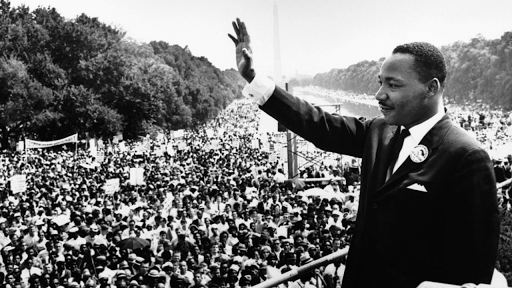
On August 28, 1963, history was made in the U.S capital. A quarter of a million U.S citizens flooded the streets in support of the civil rights movement, making history and expressing a message worldwide. Martin Luther King delivered his famous "I Have A Dream Speech" in front of the nation, and celebrities far and wide stepped in to show support for a cause that would forever change America.

The March on Washington for Jobs and Freedom (article) | Khan Academy

The results of this peaceful protest march reaped nothing but positive effects. This event was the accumulation of decades of protest and frustration from an oppressed community, pushing laws of reform and equality for the sake of the American dream. John F. Kennedy played a massive role in the progress of this movement, as he constantly met with leaders of the movement for racial justice.

The big six leaders of the civil rights movement included Philip Randolph, James Farmer, Roy Wilkins, John Lewis, Martin Luther King Jr., and Whitney Young. Only half of these men had the privilege of discussing issues with the President, who was eager to meet with the catalyst of this march. J.F.K mentioned how grateful he was to meet with them, and how they all believed they could make grand changes regarding race and democracy under his administration.

Difficult as it was, racial progress was achieved through this movement. It did not deter every hate group and eliminate all issues, however it made segregation among other things illegal. This historic era was pivotal in the growth of America as a nation, bringing black Americans their long needed legal respect in a nation that was built upon their labor.

Friday, October 30, 2020

Klansville U.S.A

 In 1966 North Carolina, the future of the Ku Klux Klan was on the line. Led by Bob Jones, he brought 10,000 members to the clan, believing that this was the best way to give voice to the poor and white working class. He felt strong racial hatred against blacks, especially those who rose financially above whites.

The Klan arose during the wake of the civil war. Essentially they would pose as confederate officers back from the dead, terrorizing freed slaves. They spent their time murdering people, and eventually the federal government condemned their behavior. This put a use to their maliciousness, but they revived themselves in the early 1920s.

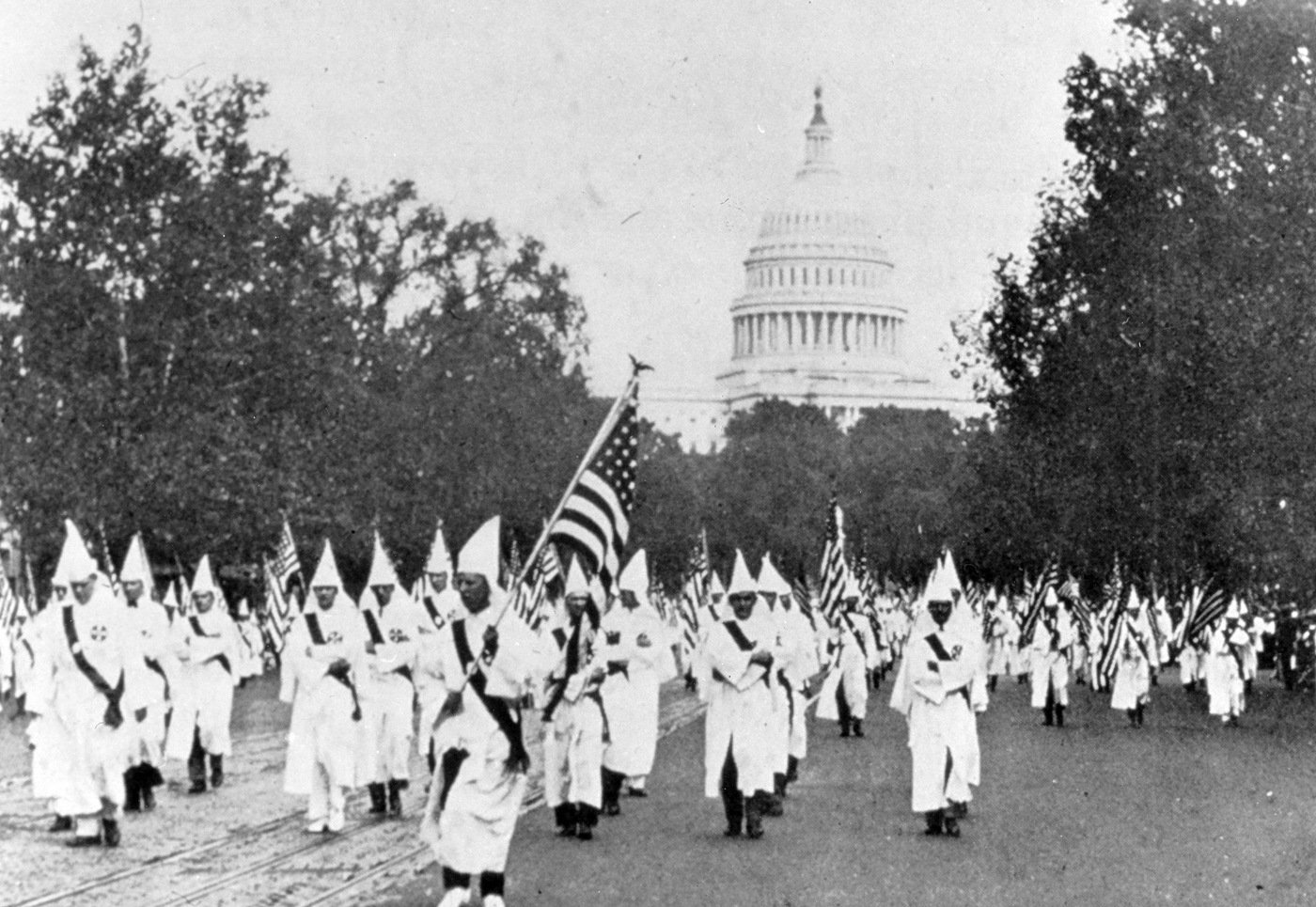
In 1925 50,000 Klan members marched through the capital, sending messages about their numbers and giving them publicity. However even if their message reached those across America, huge changes surrounding segregation would arise in the south. The Civil Rights movement began to loom large, and the push for integration put pressure on their notion.

Jones was chosen to be the Grand Dragon of the Ku Klux Klan. Seven days later Martin Luther King shared the thoughts of the Civil Rights movement to Washington D.C. Jones took inspiration from this and wanted to demonstrate his opinions the same way King did.

Gradual change was not acceptable to both sides, as the civil rights began to rise up. Blacks began putting themselves in government offices, and the Klan wanted a say in this. They saw themselves as the only organization in the south that would protest for the segregation of race.

KKK Series — FBI

Many of the events hosted by the Klan were seen as social events. Even if there were very few people, many would come to watch and partake in social events. They brought people of the same opinion together, believing that the events would convince people that desegregation was bad.

Rallies would convince some to join the Klan. The members thought that this would give them the respect and relevance that they wanted in their community. Jones believed the clan could be seen as a central force in electing politicians to positions they wanted them positioned in. He used street walks in North Carolina towns to show that his clan had nothing to hide.

Lyndon Johnson spoke to the Klan members after they gunned down a white civil rights worker in her car. They argued that the civil rights movement were the evil ones who wanted to tear down America through desegregation. After this event their event in North Carolina brought in 3,000 people, which was broadcast by CBS. They were seen in a very different light, condoning murder and hate that was shown across America.

Eventually clansmen began to see that Jones was selling opinions that made people sick, not cured. His refusal to testify and pleading of the 5th amendment alienated many of his followers. This was an incentive for many in the clan to realize the injustices of what they were doing, and the group soon fell apart. Jones was convicted of contempt in congress, and was sent into a year in federal jail.

Whites found different political avenues as the Klan became a shameful thing once more. Jones could not achieve any of his major goals and were legally unable to maintain segregation. People leaving get the clan realized that they had really descended into darkness.


Wednesday, October 21, 2020

Brown v Board of Education

The debate of wether segregation should continue in the United States brought many different and interesting viewpoints to the table. Schools across America have been brutally effected by this debate, and the question of how kids for the future will receive a good education has made the case even more important. This debate made sure this topic was thoroughly discussed, and had a momentous impact in the history and future of the African American community.

One of the arguments made in favor of Brown was that the schools may definitely be separate, but they are in no way equal. In many black school the standard education is much lower, the facilities are less sanitary, the they are simply not funded as much as white schools. Therefore not only is the standard lower for an entire American community, it is evident that the nation is making no effort to integrate them into their society.

A further talking point that was posed in favor of Brown was that the separate accommodations was unconstitutional. If you are going to have separate schools you are going to have a separate nation, and when one of these is unequally neglected then people in the nation will not have the same opportunities as other. This by definition means that all people are not created equal, and in turn the American promise is not upheld.

Five Things You Need to Know About Brown vs. Board | Alliance For Excellent  Education

By the words of the law of course the accommodation laws can lawfully be argued. However it is evident to anyone who has seen both schools that the students are not receiving the same tools for success. In the future economic malfunction will be evident due to the poor attention an American race and community is receiving. In short these were the arguments posed by Brown in his case against the Board of Education.

Next the defense for Board of Education provided arguments that would maintain Americas historical traditions. The first that arose was that there was no proof that the schools were teaching different levels of education, and that it was a fallacy that there was unequal standards implemented in the schools. If bathrooms are separate but equal, then why should schools and facilities be any different?

Another point that was made was that there is no way under the constitution that the schools being separated was unconstitutional. America has given opportunities to blacks because it has seen many from this community establish themselves in history by leaving legacies. If this community is given education that is supported then obviously the boundaries are limitless. Therefore why should the segregated schools highlight the good work that has been done for this community?

In the end the decision ruled in favor of Brown due the argument that the segregation of schools was not based on logic, and there was proof that there was separate but not equal accommodations in the schools. This decision improved the standard of millions in America and had a positive impact on the community that was deprived of rights and equality for the entirety of its tenure in the nation.

Monday, October 12, 2020

Mock Trial Blog Post

The mock trial debates surrounding a runaway slave case brought many viewpoints and attitudes. The arguments between responsibility, morality, and history taught me many things that I would not have known had it not been for the information being directly presented in front of me. The information and topics that I considered most interesting and important will be highlighted in this post.

The first defense in the case that was presented that the price of the meeting was far too cheap. A ten dollar fine would not have much significance in any slave owners life, and to fight a case for an amount this small was absurd. On top of that it was the slave owner who inflicted harm on the slave in the first place, therefore what would mean that there is a clear agreement that the owner was the deliberate aggressor in this scenario. In other words, the owner valued his ten dollars higher than his slaves life.

Although my first thoughts were that there was no way that this action could be prolonged, there were some arguments that convinced me otherwise. One of them was the fact that because the slave had not been killed or seriously incapacitated, the whole case was virtually useless. In a way this perspective is true in the sense of life value, due to the life being endangered but not taken, it is important to consider whether the discussion will achieve anything due to no one being dead.

Further perspectives that seemed to bring a new light of opinion was the matter of the injured woman being a slave. Of course a slave had no human rights and wasn't even considered such. Therefore if a man were to hypothetically destroy or harm his window, it would be the same as harming a slave. So in a way, the slave being wounded by a master who considers them as property is no an illegal or important matter.

State v. John Mann | NCpedia

Switching sides to the debate in favor for the slave, there were plenty of points that had a moral and emotional impact. Those who argued in favor of the slave claimed that ethically and morally no human should get away with harming another human, especially when the aggressor had full intent and awareness of the action they are performing. For the honor of the slave who only thought about her wellbeing in safety, the entire case is a disgrace.

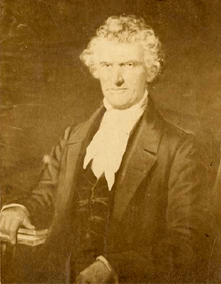
Obviously from the previous viewpoint and from the post thus far, we can see that Mann could be justifiably charged with assault had the slave been a regular American citizen. The fine line that is drawn in this case and really the arguments that are being made are either for or against the rights of a slave. The fact of the matter in this case was indeed however that a master is absolute, and has the right to render submission over his slave.


Friday, October 9, 2020

Each One Teach One Reflection

 The Reconstruction era each one teach one taught me a lot about the evolution of America. The first thing that I learned is that President Andrew Johnson was a supported of slavery in the north. He was impeached in the house but not in the senate. Surprisingly he grew up with what could be labeled as a superiority complex, adding to his attitude of aggression and personality.

Johnson planned to begin reconstruction era in the south to continue slavery effectively. He wanted the white man by himself have dominance over the south. Reconstruction completed itself 8 months after it started and allowed confederates to enter congress, leaving a large dent in African American hope to impose themselves in the U.S government.

The next topic presented was the Lincoln assassination and the effect that it had on this era. John Wilkes Booth was the man who would go all the way with this plan. He was an actor and confederate who loathed the anti slavery and reconstruction ideas, and killed the current president on April 14th, 1865.

Reconstruction & Gilded Age: Lessons for Today's America | National Review

He then fled out of the theatre and started one of the largest man hunts in the history of the nation. Booth broke his leg escaping and made it all the way to Maryland. He was caught by the police at Surrats house where he was taken under jurisdiction of the government. Lincoln lost his life and the American community lost a true friend.

A further discussion topic in the reconstruction era was the Freedman's Bureau. This event helped African Americans all across the nation support themselves and gain popularity in a time of need. Established by congress in 1865 in helped former slaves and poor whites all across the south recover after the destructive civil war.

The Compromise of 1877 helped America choose its new leader and President. Essentially it was a mutual agreement between Democrats and allies of the Republican Rutherford Hayes, marking the end of the reconstruction era. It gave the Democratic Party of slavery the power to regain political dominance in southern state government.

Ultimately the reconstruction came to an end in 1877 and had mixed results in America. Radical Republican Legislation failed to uphold and protect former slaves from white persecution, and these issues continued in the south even after this era came to a close. Black codes and racist laws were implemented to keep the peace, however the African community found its way into government positions after years of perseverance and hardship, helping the make America the true land of the free.


Monday, October 5, 2020

Reconstruction America

On June 17th, 2015, an historic black church in Charleston South Carolina was attacked by a racist terrorist, who had a deep hatred for the African American community. This event provided what can be described as an awakening for many, and also some pondering for others. To understand the motives for this event it is important to look into history. Post civil war is a good place to start.

The time period after the civil war is labeled the Reconstruction period. The hope and theme of this era was that blacks could integrate themselves in a white society, however there was steep hurdles that they were unaware of. Decades of hard work and persistence were on the horizon for the colored people of America.

Book Review: 'The Wars of Reconstruction' by Douglas R. Egerton - WSJ

The freed people longed for everything that they had been robbed of for centuries. The right to marry, own land, and live in society were some of the many things black desired. To assist this the freedman's burea was released, with over 850,000 acres of land and a budget that costs more than a week of the civil war.

Slaveries legacy was a tremendous barrier to change however. As blacks tried to integrate themselves in society, economic struggles began to haunt them more than they would have expected. Many black parent who did not have the necessary funds to raise their children had to release them into a type indentured servitude, with no say in the matter. Unable to protect their children and having them stripped away without discussion, was very reminiscent of the previous history in the centuries they desperately wanted to escape.

Military reconstruction began to protect blacks in the south from white terrorists, and threatened to jail or fire them if they continued their violence. Eventually many former rebel states compensated black communities with the right to vote (males only.) 80% had the right to vote by the end of 1867, and a new political culture rose up. The advent of black suffrage brought about mass change in the governing of America.

Former slaves brought life into society by supporting schools, shelters, and farming institutions slowly contributing to the reconstruction of the nation. White gangs began terrorizing them however, and were under an intimidation and pressure to cast their voting ballot. Half a million black men cast their vote. Ulysses Grant was elected because of these votes, and many black men were put into office. For freed people and former slaves, this was the moment they had yearned for.

The reconstruction that took place during and after these said events helped support American democracy. The value that these brave men and women brought during this era changed what was rational, and made the government realize to important black life was. The future was seen as limitless, and for one of the first times in human history a group that was so viciously oppressed grew into the highest echelons of political society.


Friday, October 2, 2020

Ferguson Ethical

The question of whether the Separate Car Act violates the fourteenth amendment is absurd. Ever since slavery ended we have been working tirelessly to integrate African Americans into our society in a safe and non violent manner. I believe that we have found this medium through the separate accommodations we have created, because they are necessary for our society to remain balanced and stable.

I would love to tell you today about why our history, law, and religion support these points. However instead, I would like to use a broader approach to this topic. In a sense it is impossible for blacks and whites to live without a society with separate accommodations because fear and hate have been cemented in both sides.

Plessy v. Ferguson (Story Time with Mr. Beat) - YouTube

To provide proof of this I would like to show some examples. The first one I would like to discuss is the factor of fear. For decades whites like myself have feared that if blacks were to live in the same society as us without divisions, it would not be safe for the general public. This is because slavery has shown us how much blacks resent and hate our community, thus why if they were to do everything exactly as us there would be a surplus of violent acts occurring in the community.

Furthermore to this point, for any society to live to its best and happiest potential it must abstain from keeping the majority displeased. If the majority of whites demand for separate but equal accommodation, then that is what must be done to keep them happy. I understand that the African American community may loathe this comment, but we are only trying to do our best in making life better than it was for them during slavery.

The next point I would like to broach is the element of hate. When discussing how to situate blacks and whites in a society as one, it would be a crime not to address the hate in both sides of the community. For centuries whites have done horrible things to the African American community, and understandably many of them hate us for it. 

Now what would happen if you took two groups that hated each other and gave them the exact same accommodations in the exact same society. There would be outburst of course. I guarantee that every week we would assemble here to debate a new case on either white on black or black on white crime. This could very well change in the future, however for now we must have separate but equal clauses so that the fresh hate the two groups have does not grow further than what it is now.

In conclusion, I see no violation of the Equal Protection clause from the 14th Amendment. Both sides get to keep their right, and both sides get to live in the land of the free. What more could a society that prioritizes happiness want?


Thursday, September 24, 2020

Nat Turner Uprising

The man responsible for the most lethal slave uprising in the history of the United States, in none other than enslaved preacher and self styled prophet Nat Turner. Overtime his legacy has portrayed him as both a hero and a villain, but what he stood for could not be more clear. To free those in bondage throughout the slave holding south, Nat Turner became the leader of the only effective and sustained slave rebellion in the United States of America.

Nat Turner was born into slavery on October 2, 1800, in Southhampton County, Virginia. His family's owner Benjamin Turner recorded young Turner as "Nat", when he died in 1810 Benjamin's son Samuel inherited Nat as his property. At a very young age Nat was taught the about the horrors of slavery in a community that was predominately black, and began educating himself in Christianity.In Search of Nat Turner – Lapidus Center

Turner's passion for Christianity lead him to become a deeply religious preacher. He gained respect from many blacks and whites in Southampton County for his remarkable intellect and phenomenal ministry skills. Through this he convinced many to support his anti slavery views, giving him a sense of power and clout in his community.

What Nat Turner is most known for however is the violent slave rebellion that he lead on August 21, 1831. His motivation and goal of this rebellion were quite simple and obvious. However what lead to these motivations were the product of his Christian and ministry lifestyle.

Deeply religious Turner had a vision that gave him an incentive to launch the slave rebellion. In the year 1825, he had heard divine voices and started being visions, interpreting them as messages. In one vision, he describes what he saw as black and white spirits engaged in conflict, with a darkened sun overseeing the battle.

In his rebellion he six of his owners family and killed an estimated 55 white people, with the help of 75 other enslaved people. As he took up weapons, supplies, and horses, he started to become a large threat to the white nation and was pursued by numerous bounty hunters. On August 23, 1831 his rebellion came to a halt, as his rebellion was impeded at Belmont Plantation.

Following this defeat, Nat Turner knew that if slavery had any hope of being forcefully abolished he had to hide himself and restart. He hid in the woods for six weeks until on October 30th he was caught and taken to a county jail in Jerusalem. When he was tried he confessed to all of his actions without regret, shortly after he was convicted and sentenced to death. Twelve days after he was caught on November 11th, he was hung in the very city he aspired to reach.

The result of his actions had a negative influence in this era, but a positive one in the coming ones. Slave masters all around began to fear their slaves in a sense, and the majority of them enforced stricter rules on their property to ensure that this sort of event would not take place under their jurisdiction. It destroyed the falsehood that slaves content to be property, and caused Southern whites to past laws that prohibited the education, assembly, and movement of slaves.

Nat Turner's rebellion became a hot talking point before one of the most defining era's in American history, the Civil War. In the Virginia Slavery Debate to abolish the institution, Nat Turners rebellion was one of the most public focused and sustained discussion of slavery in any southern state. Abolitionist grew further in number by the day not only because they wanted to end the slavery, but because they did not want to see blacks in their state out of a fear for their safety.


https://www.history.com/topics/black-history/nat-

turnerhttps://www.thirteen.org/wnet/slavery/experience/religion/spotlight.htmlhttps://www.washingtonpos

t.com/history/2019/06/01/birthplace-american-slavery-debated-abolishing-it-after-nat-turners-bloody-revolt/

Sunday, September 13, 2020

Anti Slavery: Fredrick Douglass

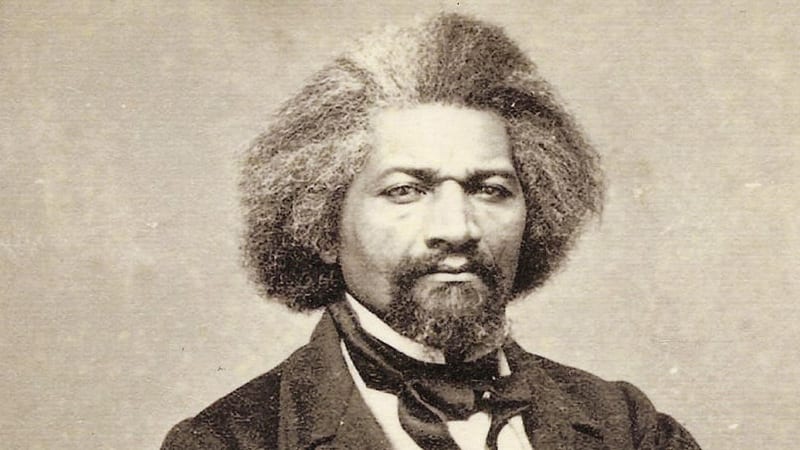
Slavery is cruel, wicked, and violates the great laws of liberty written on every human heart. It is not the brutality of it which makes it evil, but the lack of freedom that it promises. This is a fact. The Declaration of Independence contradicts the very institution. 

"We hold these truths to be self-evident, that all men are created equal and that they are endowed by their Creator with certain unalienable Rights, that among these are Life, Liberty, and the pursuit of Happiness.” You cannot form a country on the basis that every individual has the right to liberty, and then outlaw an entire race of their freedom.
The Life of Frederick Douglass | UNCF

I'd like to ask you, what is the Fourth of July to slave? It is a mockery. Your celebration of independence only strengthens the differences between a freeman and a slave, bringing a blot upon the American name.

Through my experience I have seen first hand that this establishment is forced upon many you. When I became a slave to Mr Auld, I recall one instance where his wife began to teach me how to read. Mr Auld caught wind of this and scolded his wife, in short saying "It would forever unfit him to be a slave." Ever since Mrs Auld never treated me the same. However the white mans fear of an educated slave only drove me to become more educated.

Your ownership of slaves is having a more significant impact on you rather than your slave even. When you are under the belief that slavery is part of the natural structure of society, you will see damaging effects to yourself. Mrs Auld being evidence of this.

The only reason you are able to have control over your slaves is not because of the physical aspect, but the mental one. You fear that your world would crumble if your subservient had the same knowledge as you did. Im of course referring to the contented slave scheme.

When I was twenty years old I escaped to New York and began working as an anti slavery orator and activist. The works that I created shed light on how I was treated while in bondage. The reaction to my works were mixed but impressive.

If I were to describe my experiences with slavery we could be here all day. Instead I'd like to talk to you about the impression it leaves on a slave when they first arrive to begin the worst years of their lives. Hardship, hunger, whipping, and nakedness are the themes of the short story I am about to describe.

At the Lloyd plantation I spent my first eight years, where the overseer's where extremely cruel to slaves. No trace of kindness from anyone. After my time with Ms. Auld I returned to this plantation with a new perspective of slavery, that a hateful mindset was taught and not provided in birth.

To tame my "unruliness", I was beaten regularly. The end goal I assume was to make me feel broken, and remind me of my place as a slave and a black man. However, I prevailed through these hardships and worked my way to freedom after being imprisoned.

To me freedom was more than just being away from bondage, my mind had to be free as well. This is what made me powerful, and what many of you were afraid of. Education sows the first seeds of freedom. You are afraid that if the slaves you own become free men and women, then they will finally gain a sense of who they really are. 

So I ask you. Should an organization that it built upon that themes of fear and bondage really exist in the land of the free?


https://plato.stanford.edu/entries/frederick-douglass/

https://www.history.com/news/frederick-douglass-

bicentennialhttps://www.ukessays.com/essays/politics/frederick-douglasss-arguments-against-slavery.php

Thursday, September 10, 2020

How Christianity has condoned slavery

Religion is humanity's most powerful mental creation. Throughout history, it has been used to define, justify, and defend actions. The institution of slavey is undoubtedly among this list, being highlighted on multiple occasions in religious text.

In early America Christian slaveholders would constantly remind their slaves of a specific verse in the Bible. It comes from one of Apostle Paul's epistle, Ephesians 6:5-7, which briefly states that slaves should be obedient to their masters, as unto Christ. In the church this verse would be given spotlight for masters to convince their property that what they were doing was justified and in accordance with the Lord.

A more critical argument to why slavery was justified in the Bible, lies in Jesus Christ himself. Through the entire text Jesus remains silent on the issue, and never specifically calls it a sin. Slaveholders in the south would use this evidence to make claims that Jesus had no issue with the institution, saying that the Word did not spell out what was right or wrong.

According to a study in 1835 by the Charleston Mercury, the slaveholding institution cannot be considered anti Christian. In the old testament, God and the Patriarchs approve, giving slave owners the right to have human property. They believed however that if they gave their slaves an outlet to Christ, then they would be freed from their savage like ways.

Through the lens of religion, slave holding can definitely be defended. When it comes the Bible it is evident to see that slavery is never outlawed outright. Because of this one can make a solid argument that Christianity has condoned slavery even though it barely speaks on it.


https://www.christianitytoday.com/history/issues/issue-33/why-christians-supported-slavery.html

Friday, August 28, 2020

The Supreme Court

The Supreme Court of the United States of America is the most powerful judicial force on the face of the Earth. Founded on March 4, 1789, it has gone through amendments and adjustments on its way to surpassing congress. Resting their power in the public faith, it was no fluke that the Supreme Court is the most refined and demanding branch of government in the United States.


When discussing the Supreme Court it is paramount to understand two things. Firstly it's functions, and secondly its traditions. The Court receives around 7,000 cases per year, however it only accepts roughly 100 of this sum.

Even before a case can reach the Supreme Court, it must go through a trial case. In other words the cases that will reach the Court are thoroughly reviewed and scrutinized before they even begin.

There are only nine justices that work on the Supreme Court. These men and women are selected by the President, and typically serve on the Court for 16 years. Although, many on of the nine would argue that one does not truly become accustomed the lifestyle until their first four or five years, thus is the nature of the job. Most describe their first conference with the Court as an electrifying experience, and the most striking procedure in the industry.

When it comes to evaluating a case, the Supreme Court is in a world of its own. When the nine assemble to discuss a case, there are set of unspoken rules that they all must abide by.

One of them being that everybody must speak once before anybody speaks twice, and another being that difficult questions must be addressed and discussed. This process is seen as necessary to ensure that nothing is overlooked.

In my personal opinion, the way the Supreme Court deals with cases is a work of genius. When discussing an important topic, it is critical to have as much feedback as possible if it is available. The nine justices treat cases as discussions and input their own opinions.

When a topic is approached as a conversation and not an argument, it is more likely that everyone involved will have some effect on the outcome of the case. Through this they reach the best verdict possible, making the United States Supreme Court the most refined court system on the planet.


https://www.uscourts.gov/about-federal-courts/educational-resources/about-educational-outreach/activity-resources/about

The Nations First Shield Law

  For over two hundred years in the United States of America, the struggles of journalists have brought several ethical issues to the govern...