Thursday, September 24, 2020

Nat Turner Uprising

The man responsible for the most lethal slave uprising in the history of the United States, in none other than enslaved preacher and self styled prophet Nat Turner. Overtime his legacy has portrayed him as both a hero and a villain, but what he stood for could not be more clear. To free those in bondage throughout the slave holding south, Nat Turner became the leader of the only effective and sustained slave rebellion in the United States of America.

Nat Turner was born into slavery on October 2, 1800, in Southhampton County, Virginia. His family's owner Benjamin Turner recorded young Turner as "Nat", when he died in 1810 Benjamin's son Samuel inherited Nat as his property. At a very young age Nat was taught the about the horrors of slavery in a community that was predominately black, and began educating himself in Christianity.In Search of Nat Turner – Lapidus Center

Turner's passion for Christianity lead him to become a deeply religious preacher. He gained respect from many blacks and whites in Southampton County for his remarkable intellect and phenomenal ministry skills. Through this he convinced many to support his anti slavery views, giving him a sense of power and clout in his community.

What Nat Turner is most known for however is the violent slave rebellion that he lead on August 21, 1831. His motivation and goal of this rebellion were quite simple and obvious. However what lead to these motivations were the product of his Christian and ministry lifestyle.

Deeply religious Turner had a vision that gave him an incentive to launch the slave rebellion. In the year 1825, he had heard divine voices and started being visions, interpreting them as messages. In one vision, he describes what he saw as black and white spirits engaged in conflict, with a darkened sun overseeing the battle.

In his rebellion he six of his owners family and killed an estimated 55 white people, with the help of 75 other enslaved people. As he took up weapons, supplies, and horses, he started to become a large threat to the white nation and was pursued by numerous bounty hunters. On August 23, 1831 his rebellion came to a halt, as his rebellion was impeded at Belmont Plantation.

Following this defeat, Nat Turner knew that if slavery had any hope of being forcefully abolished he had to hide himself and restart. He hid in the woods for six weeks until on October 30th he was caught and taken to a county jail in Jerusalem. When he was tried he confessed to all of his actions without regret, shortly after he was convicted and sentenced to death. Twelve days after he was caught on November 11th, he was hung in the very city he aspired to reach.

The result of his actions had a negative influence in this era, but a positive one in the coming ones. Slave masters all around began to fear their slaves in a sense, and the majority of them enforced stricter rules on their property to ensure that this sort of event would not take place under their jurisdiction. It destroyed the falsehood that slaves content to be property, and caused Southern whites to past laws that prohibited the education, assembly, and movement of slaves.

Nat Turner's rebellion became a hot talking point before one of the most defining era's in American history, the Civil War. In the Virginia Slavery Debate to abolish the institution, Nat Turners rebellion was one of the most public focused and sustained discussion of slavery in any southern state. Abolitionist grew further in number by the day not only because they wanted to end the slavery, but because they did not want to see blacks in their state out of a fear for their safety.


https://www.history.com/topics/black-history/nat-

turnerhttps://www.thirteen.org/wnet/slavery/experience/religion/spotlight.htmlhttps://www.washingtonpos

t.com/history/2019/06/01/birthplace-american-slavery-debated-abolishing-it-after-nat-turners-bloody-revolt/

Sunday, September 13, 2020

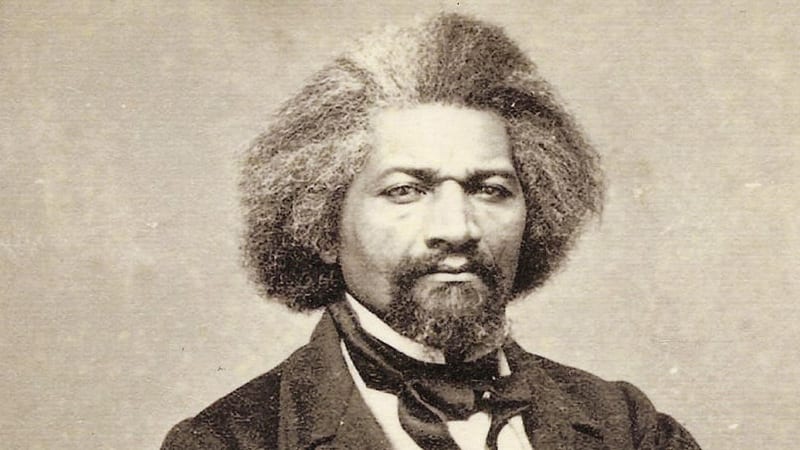
Anti Slavery: Fredrick Douglass

Slavery is cruel, wicked, and violates the great laws of liberty written on every human heart. It is not the brutality of it which makes it evil, but the lack of freedom that it promises. This is a fact. The Declaration of Independence contradicts the very institution. 

"We hold these truths to be self-evident, that all men are created equal and that they are endowed by their Creator with certain unalienable Rights, that among these are Life, Liberty, and the pursuit of Happiness.” You cannot form a country on the basis that every individual has the right to liberty, and then outlaw an entire race of their freedom.

The Life of Frederick Douglass | UNCF

I'd like to ask you, what is the Fourth of July to slave? It is a mockery. Your celebration of independence only strengthens the differences between a freeman and a slave, bringing a blot upon the American name.

Through my experience I have seen first hand that this establishment is forced upon many you. When I became a slave to Mr Auld, I recall one instance where his wife began to teach me how to read. Mr Auld caught wind of this and scolded his wife, in short saying "It would forever unfit him to be a slave." Ever since Mrs Auld never treated me the same. However the white mans fear of an educated slave only drove me to become more educated.

Your ownership of slaves is having a more significant impact on you rather than your slave even. When you are under the belief that slavery is part of the natural structure of society, you will see damaging effects to yourself. Mrs Auld being evidence of this.

The only reason you are able to have control over your slaves is not because of the physical aspect, but the mental one. You fear that your world would crumble if your subservient had the same knowledge as you did. Im of course referring to the contented slave scheme.

When I was twenty years old I escaped to New York and began working as an anti slavery orator and activist. The works that I created shed light on how I was treated while in bondage. The reaction to my works were mixed but impressive.

If I were to describe my experiences with slavery we could be here all day. Instead I'd like to talk to you about the impression it leaves on a slave when they first arrive to begin the worst years of their lives. Hardship, hunger, whipping, and nakedness are the themes of the short story I am about to describe.

At the Lloyd plantation I spent my first eight years, where the overseer's where extremely cruel to slaves. No trace of kindness from anyone. After my time with Ms. Auld I returned to this plantation with a new perspective of slavery, that a hateful mindset was taught and not provided in birth.

To tame my "unruliness", I was beaten regularly. The end goal I assume was to make me feel broken, and remind me of my place as a slave and a black man. However, I prevailed through these hardships and worked my way to freedom after being imprisoned.

To me freedom was more than just being away from bondage, my mind had to be free as well. This is what made me powerful, and what many of you were afraid of. Education sows the first seeds of freedom. You are afraid that if the slaves you own become free men and women, then they will finally gain a sense of who they really are. 

So I ask you. Should an organization that it built upon that themes of fear and bondage really exist in the land of the free?


https://plato.stanford.edu/entries/frederick-douglass/

https://www.history.com/news/frederick-douglass-

bicentennialhttps://www.ukessays.com/essays/politics/frederick-douglasss-arguments-against-slavery.php

Thursday, September 10, 2020

How Christianity has condoned slavery

Religion is humanity's most powerful mental creation. Throughout history, it has been used to define, justify, and defend actions. The institution of slavey is undoubtedly among this list, being highlighted on multiple occasions in religious text.

In early America Christian slaveholders would constantly remind their slaves of a specific verse in the Bible. It comes from one of Apostle Paul's epistle, Ephesians 6:5-7, which briefly states that slaves should be obedient to their masters, as unto Christ. In the church this verse would be given spotlight for masters to convince their property that what they were doing was justified and in accordance with the Lord.

A more critical argument to why slavery was justified in the Bible, lies in Jesus Christ himself. Through the entire text Jesus remains silent on the issue, and never specifically calls it a sin. Slaveholders in the south would use this evidence to make claims that Jesus had no issue with the institution, saying that the Word did not spell out what was right or wrong.

According to a study in 1835 by the Charleston Mercury, the slaveholding institution cannot be considered anti Christian. In the old testament, God and the Patriarchs approve, giving slave owners the right to have human property. They believed however that if they gave their slaves an outlet to Christ, then they would be freed from their savage like ways.

Through the lens of religion, slave holding can definitely be defended. When it comes the Bible it is evident to see that slavery is never outlawed outright. Because of this one can make a solid argument that Christianity has condoned slavery even though it barely speaks on it.


https://www.christianitytoday.com/history/issues/issue-33/why-christians-supported-slavery.html

The Nations First Shield Law

  For over two hundred years in the United States of America, the struggles of journalists have brought several ethical issues to the govern...